Stranger Things Season 5 Excitement

I have chosen November 24, 2025 to write about my excitement regarding tomorrow’s release of Stranger Things Season 5 on Netflix.

As a huge Sci-Fi fan and proud GenXer who misses the freedom and fun of the 1980s, I have been sharing my thoughts about the impact of the Stranger Things series since the first season debuted in 2016.
The first three Stranger Things season articles I blogged on this site made up the meat of Chapter 5 in my book Strong Words and Simple Truths: The Courage to Communicate which I published on Amazon in late 2021 (see below screenshot).
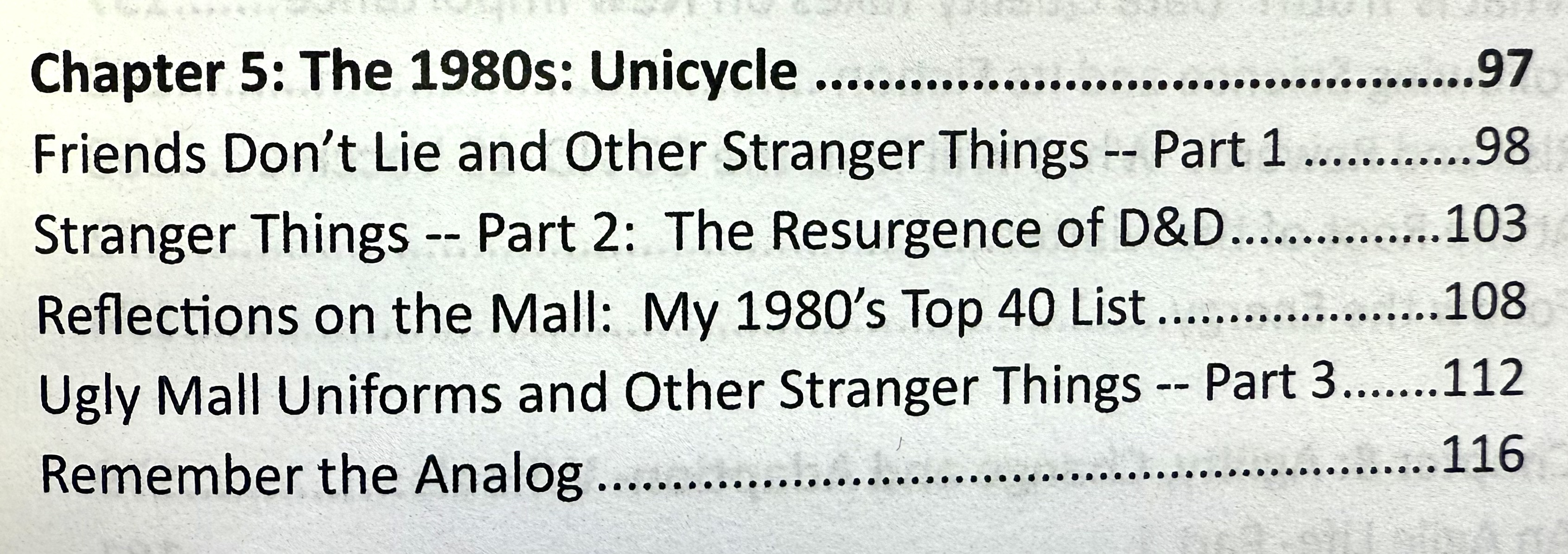
These stories and adventures are some of the most popular and viewed in the last eight years and I enjoyed writing them.

Link to Friends Don’t Lie and Other Stranger Things- Part 1

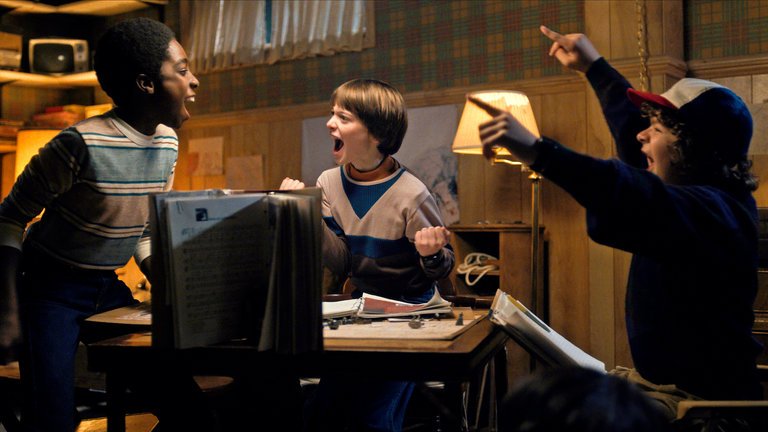
Link to Stranger Things Part 2: The Resurgence of D&D

Link to Ugly Mall Uniforms and Other Stranger Things- Part 3

Today I provide you with a recap of Season 4 which was explosive to say the least. Hopefully this will get you warmed up for Season 5 this week!

Season 4 of Stranger Things was released in the summer of 2022 and I am happy to share this repost.

Strange and Independent Things- July 4, 2022

“Freedom lies in being bold.” – Robert Frost

I have chosen Independence Day 2022 to write about Stranger Things Season 4 for a number of reasons.  

First, the finale was big and bold, colorful and dark, intense and touching- much like our 4th of July fireworks.

Second, the themes of standing up and fighting back against bullies, tyrants and evil forces resonated with me.

Third, it reminded me of the kick-ass American spirit, strength and courage of the 1980s.

Lastly, brave heroes are important and should be recognized and respected. 

I’ve written about the prior three seasons of Netflix’s popular series Stranger Things in my blog and book and I continue to enjoy the fond memories of my childhood.   Being a class of 1985 graduate made me connect even more with the story and the characters of Hawkins High School class of 86.   I was taken back to Friday nights spent with my girlfriends at Skateway 9 near my hometown in New Jersey.  The lights, music and action of the roller rink were perfectly captured in the show and it brought back vivid memories of being bullied by the mean-girls at school who didn’t like me for some reason or another. 

Being a fan of the band Metallica, I was especially delighted by the scene with Eddie Munson (my new favorite character) playing “Master of Puppets” on top of the trailer in the Upside Down. This character was also the Dungeon Master in the D&D games played with Dustin, Will, Lucas and Mike. In the end it was a brilliant and masterful performance by the misfit teenager who partly reminded me of Eddie Van Halen and some of the guitar-playing boys I went to high school with (Joe Argese, Scott Janis, Craig Boschetti, John Horvath and Mike Gardner).

Speaking of music in the 1980s, I have great memories of being in the Spotswood High School Marching Band/ Color Guard. Just like in Stranger Things, we had dorky, hot and uncomfortable polyester uniforms and it didn’t stop us from having fun at the football games, local parades and other events. We even took cool bus trips to exotic places like Montreal thanks to our amazing music teachers Mr. Cohen and Mr. Milstein. I’m still in touch with many of my friends from band on Facebook and during trips back home including Ed Dougherty, Charles Kolbasowski, Steve and Carol Varga, Rose Fairchild Neliden, Stacy Remantas, and Janet Warley. 

The amazing cast of strong female characters on Stranger Things continued to inspire and impress me. These women didn’t give up and gave it their all in the face of extreme pain and malevolence. I especially liked the intense powers of Eleven, the courage of Max, the ferociousness of Nancy, and the witty intelligence of Erica. These strengths and personal attributes are sorely needed in 2022. Watching Nancy expertly handle the shotgun to fight off the monsters reminded me of Linda Hamilton in Terminator 2. 

Pure, unadulterated, bad-ass courage and skill by nerves-of-steel women- that’s what I’m talking about!

And so, these are some of my random, strange, and independent thoughts on July 4th about Season 4 of the sci-fi hit Stranger Things.  

Here is the strong and simple message I was left with:
Keep fighting for your friends and don’t give up.  

Good will conquer evil.

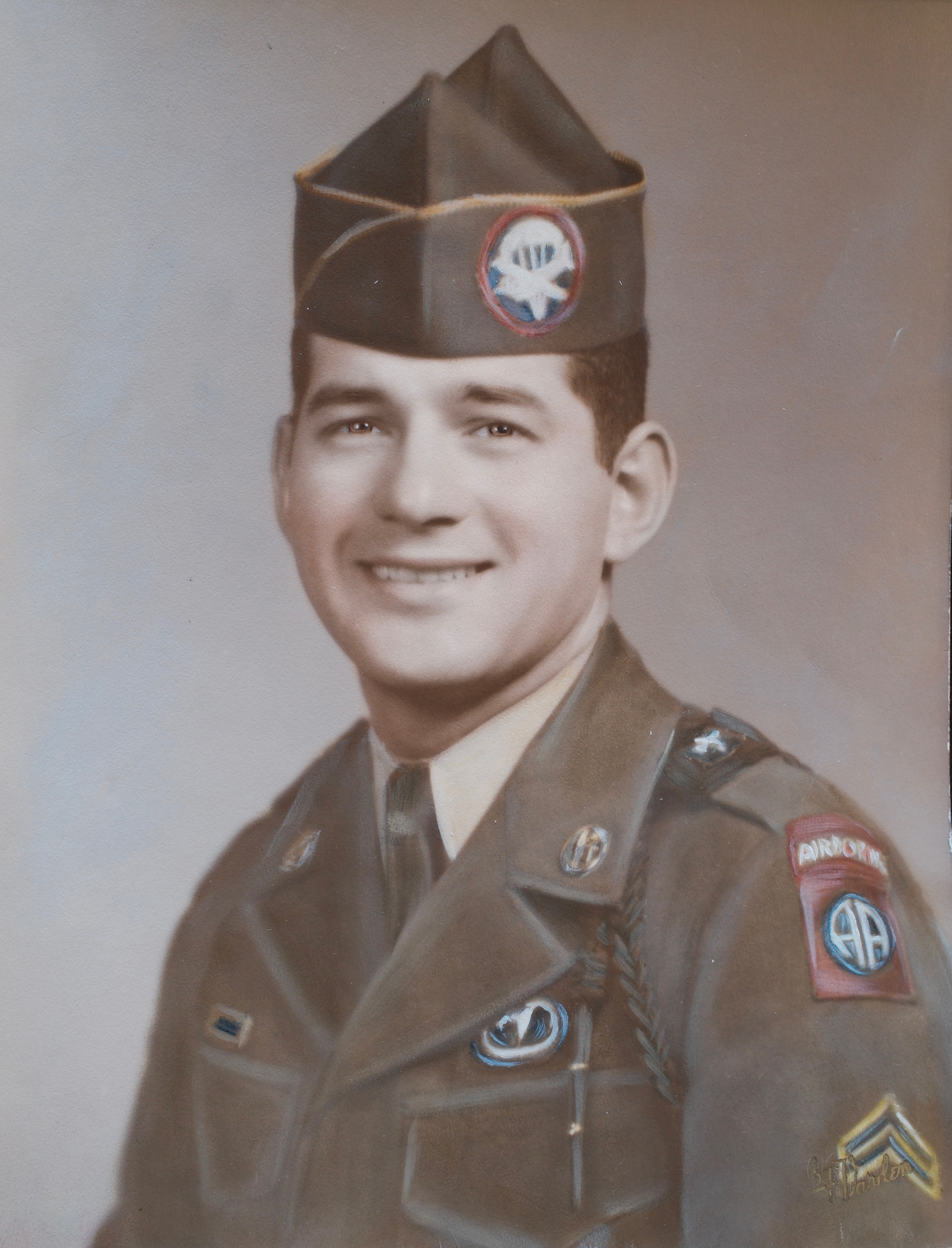
James S. Jauregui: An Airborne Signal Story

Sharing stories and experiences is something humans enjoy.

Knowing that their service in the military made a difference in the world is something that most veterans want.

After hearing and learning about James Jauregui’s 20+ years of service in the U.S. Army, it was clear to me that he made a strong and positive impact on his country.

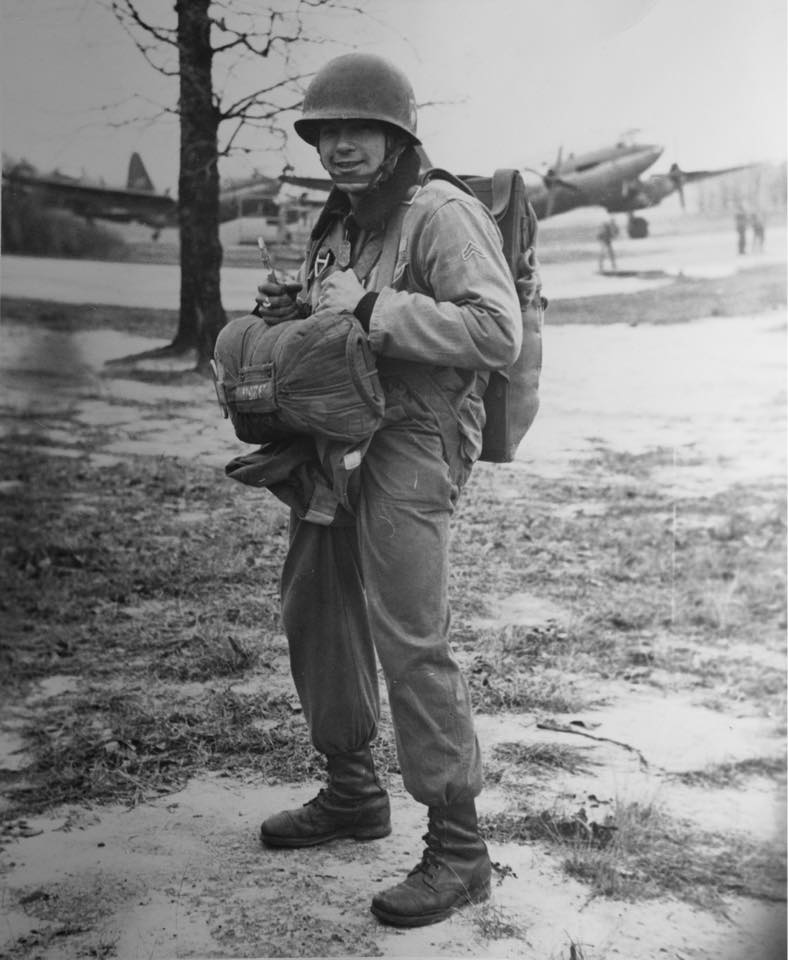
When I was first introduced to James by his brother-in-law, Gil Reyes, I had an instant affinity for him.   Even though we are 38 years apart, I could relate to James’ training in the Signal Corps at Fort Gordon, GA and his experience at Airborne School at Ft. Benning.  He was a paratrooper who jumped out of many different types of Airforce planes including the C-46, C-82, and C-119.

James was born on December 18,1929 in Los Angeles, California and was the eldest of five children. His siblings were named Yolanda, Graciella, Harvey, and Arturo.  His parents, Salvador and Juanita, were born in Mexico and placed a great deal of importance on respect and trust. They were proud, hardworking and ran a business.

James volunteered to serve in the U.S. Army in the summer of 1947.  I found it interesting that he didn’t tell his parents that he was joining the military until after he signed the papers at the recruiting station.  

Inspired by his cousin, Dan Soria, a brave Army Airborne solider who fought in Germany and was captured during WWII, James made sure that he got his jump wings and wasn’t a “leg”.  In the U.S. Army, “leg” is a term used to describe a soldier who is not part of an airborne or air assault unit. It specifically refers to soldiers who have not completed jump school and earned their Airborne wings.

James went to basic training at Fort Ord in California and was trained as a Lineman (MOS -12Q) in the Signal school at Ft. Gordon.  Over his 23 years on active duty, he served overseas many times and was stationed in South Korea post-war, Germany, Panama, and then Vietnam in the late 1960s.  His mode of transportation to Germany and Korea was by ship and he noted that his return home from Germany was by plane. He met his second wife Linda while he was stationed in Germany. He retired in 1970 as a Staff Sergeant (E6).

During his time in the miliary, James started out running communication wires, then he worked the switch boards and later became an expert in the AN/MRC-69 radio terminal set which was used for vehicle-mounted, multi-channel communications, providing trunking at the division level by offering both telephone and teletypewriter channels.  Later in his service career, he trained other soldiers on the new systems at the Signal school at Ft Gordon and was even asked to assist in the construction of a new building. 

James is an adventurous, curious and intelligent man who loved building and flying model airplanes. In school, he enjoyed mathematics and was good at fixing things. He took flying lessons and was skilled in woodworking, electronics.  James is multi-talented and has a knack for repairing and building. 

When I asked what James enjoyed most about the Army, he stated he liked the structure.   The things that he didn’t like about serving in the military was “all the unnecessary chicken-shit tasks” that he and his soldiers were asked to do and he specifically mentioned the often-inane orders of certain junior officers from West Point.

It was my honor and privilege to interview James and document his experiences and stories about his time in the Army.   While taking some photos, my husband Steve encouraged him to don his dress uniform jacket which boldly displayed the airborne wings he earned all those decades ago in Georgia.  I had never seen the orange background behind the badge and it made the wings pop.

Wearing a shirt with a U.S. flag, James is a proud American who served his country honor and distinction.  Two years after the end of WWII, he raised his right hand and volunteered to defend the United States against all enemies, foreign and domestic.  Little did he know just how turbulent the world would be during the 1950s and 60s.

James S. Jauregui. Photo by Steve Smull

When asked about his overall feelings about serving 20+ in the U.S. Army, he said, “I did it my way!”  He reflected that it was very hard at times and he missed his family, but he enjoyed the adventure, the opportunity to learn new things, and teaching others.  While travelling around the world and the country, James touched many lives and made a difference in the world.

James is a new member of the Ernest A. Love American Legion Post 6 in Prescott, Arizona and I salute and welcome him.   

As the First Vice Commander of Post 6, I have been planning to write monthly Member Spotlight Profiles and was thrilled to have the opportunity to meet James and feature him as our very first Profile to be published in our monthly Post newsletter and submitted to the national Legiontown.org website.

James and his brother-in-law Gil during the interview in Prescott, Arizona

An Honor to Serve: Prescott’s Post 6 Guard

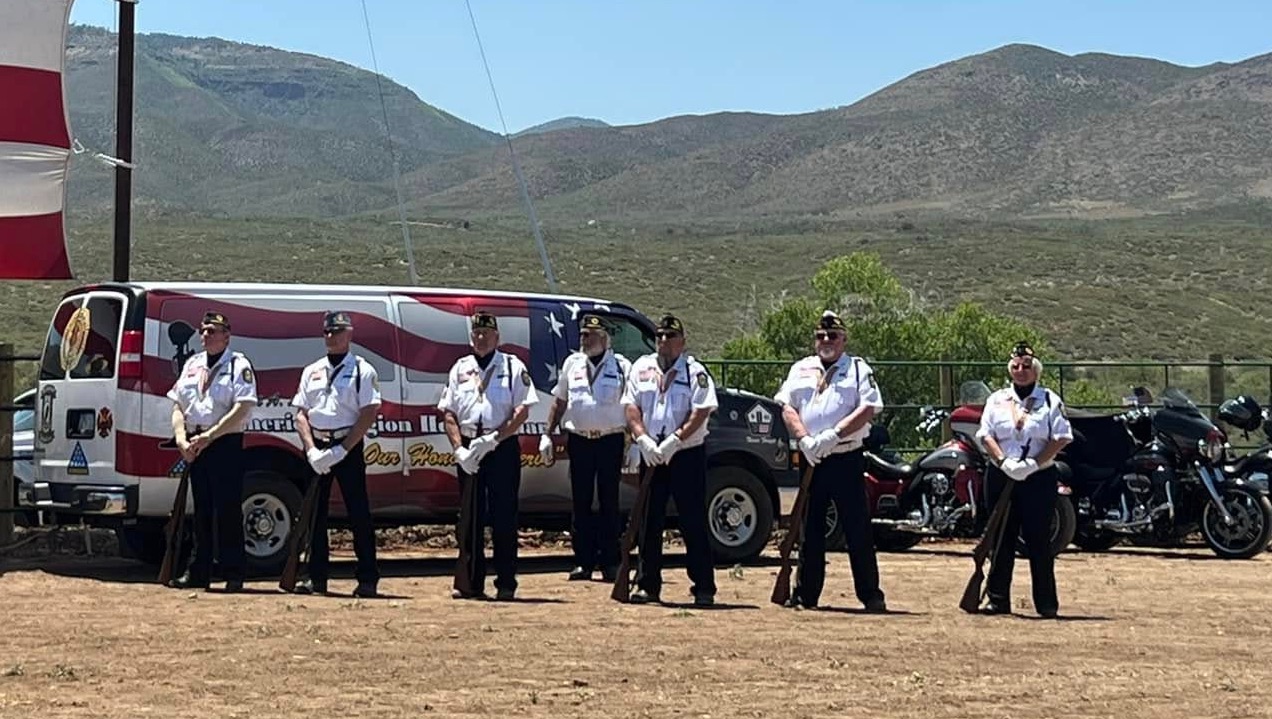
The Honor Guard at the Ernest A. Love Post 6 American Legion is impressive and dedicated.   For 30 years, they have provided support and comfort to the families and friends of deceased veterans.

Averaging 300 services and events a year, the honor guard is committed to paying respect and providing the final salute to those who have served their country.

The American Legion Honor Guard provides military honors to deceased veterans who would otherwise not receive them, including folding and presenting the flag to survivors, and performing a three-volley gun salute at funerals. 

The 17-member team here in Prescott, Arizona takes its role seriously and can be seen most afternoons gathered next to the old fireplace at the Post 6 building, raising their glasses in a closing toast to the veteran they just honored at the local or national cemetery.

Post 6 Honor Guard pays their respects at the Vietnam Veteran Day Ceremony on 3/29/25 in the Prescott, AZ Courthouse Plaza. Photo by Steve Smull.

When I asked some of the Post 6 Honor Guard members “What is the most important thing you provide to the veterans’ families at these services?”, they all replied, “Our presence”.  

Wow! That simple yet powerful word, presence, hit me hard as I realized that showing and being there for these ceremonies has an immense impact on those who are mourning the loss of a loved one.  Sadly, sometimes the honor guard are the only ones present to pay respects to the veteran.

What these Honor Guard team members do is American Legion exemplified and is greatly respected and appreciated by American Legion members and family chapters as well as the community.

Here’s the history of the group I received from the Captain of the Post 6 Honor Guard:

“In March of 1995, Ruffner Wakelin Funeral Home called the Post and asked if we could provide Military Honors for a deceased veteran. Al Tercero, a several times Past Post Commander, and Past Department Commander, said yes. 

Al organized our Honor Guard, consisting of 2 VFW members and 3 Post 6 members. Our first bugler was Leonard Rosie Ross, bugler for General Eisenhower during WWII, and member of Post 6 and VFW Post 541. Our Honor Guard soon began traveling throughout Northern Arizona to render Honors for veterans, from Kingman to the Navajo Nation to Wickenburg the White Mountains. Where we were requested, we went.

In the last thirty years, our Honor Guard has rendered honors for 9,000 veterans, presented Colors at over 1,000 events, and represented Post 6 in nearly 100 parades.

Our Honor Guard is a certified Authorized Provider by the Department of Defense. That means that, when the Active-Duty services cannot provide the Honor Guard for the veteran, we are obligated to do so. Your Honor Guard takes that responsibility seriously and is ready to provide anything needed to honor our veterans.”Clarence S. “Sherm” Scott III , Captain, Post 6 Honor Guard and Past Post 6 Commander

Taken on Flag Day, 2024 in Prescott, AZ during a flag burning ceremony.

A toast to the members of the Post 6 American Legion Honor Guard!

Thank you for your noble service. Your presence at these ceremonies holds immense significance, offering comfort and solace to those mourning their beloved veterans.

You are the embodiment of honor and respect, and your dedication enriches our community, our Legion, and our nation to which we are so indebted.

Here’s to the Post 6 Honor Guard—may your valor, dedication, and unwavering presence continue to shine brightly, honoring the legacy of those who served.

Cheers!

When Love is Earnest

I knew that Prescott was a veteran-friendly town steeped in rodeo and Wild West history but what I didn’t know until we moved here 5 months ago was just how many strong and brave heroes hailed from this mile-high, Arizona city.

As a U.S. Army veteran, I value and appreciate military history and traditions. From my recitation of the Flanders Field poem in Toastmaster speeches to my affinity for the symbolic red poppy, my active participation in the American Legion and VFW has increased my knowledge and awareness of the sacrifices so that so many U.S. servicemen and women have made for their country and in support of our allies across the globe.

Photo by Steve Smull

I was delighted when I discovered that the American Legion post in Prescott, AZ was named after WWI pilot Ernest A. Love. The airport also bears this home-town hero’s name. What I didn’t realize until I attended a presentation by Air Force veteran and pilot, Dan Baier, at Yavapai College in November 2024, was just how powerful and Ernest’s story was. Mr. Baier was a master storyteller and brilliantly wove the letters, photos from the early 1900’s into an engaging historical and emotional experience that left few dry eyes in the auditorium.

Ernest A. Love is buried in Arlington National Cemetery due to the tenacious efforts of his mother, Etta, who did not wish to have her son laid to rest on enemy soil. What impacted me most about his story were the words engraved on this headstone which read:

“If I am to give my life for this cause, I am satisfied.

There is no way I’d rather go than serving my County.”

Wow, this hits hard and speaks to the loyalty and passion of this young American who graduated from Prescott High School in 1914 and enrolled in ROTC while at Stanford University. He was commissioned a 1LT and was sent to flight school and training in San Diego and then France.

Ernest was an exceptional aviator and flew 22 missions in two and a half months in France. His wood and canvas plane was a SPAD 13 and he was killed in action on September 15, 1918 and his last letter to his Mom, Etta in Prescott was dated September 12th. This letter was not signed.

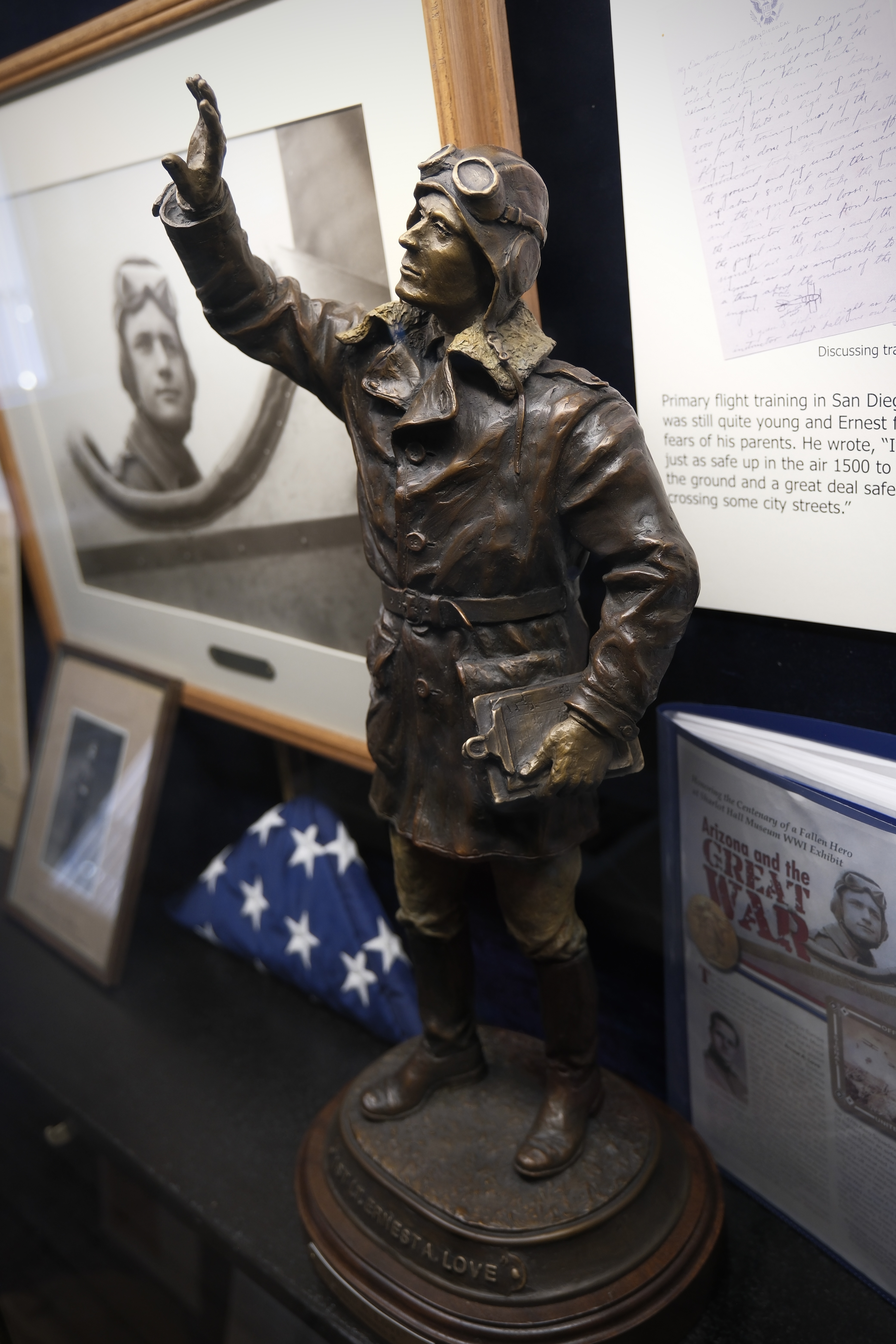
So many heartfelt letters were exchanged during this time and they are archived and shared at the Sharlot Hall Museum as well as in the display case at the American Legion Post in Prescott, Arizona.

Display case at Legion Post 6 in Prescott, AZ. Photo by Steve Smull

Love of Country. Support of Veterans.

One hundred-five (105) years ago, the American Legion and the Ernest A. Love Arizona Post 2 (later to become Post 6), were founded. 

The four pillars of Veteran’s Affairs & Rehabilitation, Americanism, National Defense, and Youth & Children are still the guiding principles of the nation’s largest veteran organization. 

On a local level in Prescott, the post has been vibrant center of activity and support for veterans, families, scouts, and students. Since getting their physical post home on 202 S. Pleasant Street in 1930, the post has hosted countless dances, dinners, social and community events. 

American Legion was chartered by the U.S. Congress in September of 1919 and the Prescott Post was named after Ernest A. Love that year. 

By all accounts Ernest loved his country. He was friendly, helpful and optimistic about life in America. He was a Boy Scout, supportive son, and neighbor. 

I am proud that members of Legion Post 6 and its family of chapters (Auxiliary, Sons of the Legion, and Legion Riders) pay tribute and respect to those who gave up their lives to defend freedom and liberty.

I am proud the American Legion helps veterans, families, and students in their communities.

I am proud that a group of U.S. soldiers stationed in France after WWI came up with the idea to start this organization to increase the low morale of the war-weary troops.

I am motivated and inspired by Ernest A. Love’s story of duty and honor which are forever inscribed in white marble stone in Arlington: 

I am proud that I am a member, and now officer, of the American Legion post in Prescott that is named Ernest A. Love Post 6. 

“There is no way I’d rather go than serving my Country.”

Prescott’s hometown hero has a life-sized statue of him outside of the local airport which bears his name.  He also has a large memorial display of photos, letters, military service caps, and a burial flag in the main hall of American Legion Post 6 on South Pleasant Street and it was honor to share his story with you. 

Post 6 Members Lou Cappadona, Brenda Smull & John Boyer. Photo by Steve Smull

When love is earnest, it is all the more powerful with its sincere and intense conviction.

1LT Love showed us this in the fields of France in 1918 and his spirit and dedication to country lives on in the extended family of the American Legion.

Photo by Steve Smull

Display case in the hall of Legion Post 6 in Prescott, AZ. Photo by Brenda Smull

Memories of Mom

For those whose mothers are no longer living on this earth, do you ever wonder what she would think about our world today? I often think about how my mom would react to my decisions and current situation. What advice would our mothers give us if they were sitting next to us right now?

It’s been almost 24 years since my sweet Mom passed away from lung cancer and Mother’s Day is always one of the saddest days of the year for me.

The best thing I can do is honor my Mom’s memory by doing and saying things that I know she would appreciate and be proud of. Striving to emulate her values with my actions.

Virginia Mary was born during the Great Depression and had a strong, spunky spirit and an infectious smile. She was extremely generous with her time and limited money and always rooted for and lent a helping hand to the underdog. Virginia was kind, jovial and optimistic. Her friends called her Ginny and I called her Mom.

One of my Mom’s favorite sayings was “Live, Love, Laugh” and that was how she lived her life. I never heard her complain or speak poorly of others, She was stoic when she was sick and cared more about taking care of the needs of others than she did for herself.

My Mom was hearing impaired since childhood and wore hearing aids which I don’t think helped her much. She was good at reading lips, body language, and expressions. She loved to read mystery books and write letters to her family. I am so happy to have a stack of letters she wrote to me during the early 1990s when I was in the Army and deployed in Saudi Arabia. This was the best way to communicate with her and they mean the world to me now.

Mom was not one to give unsolicited advice but if you asked she would give her simple and wise opinion. She didn’t use big words but she had large and important ideas, lessons, and experiences to share.

I’d like to imagine that if my Mom were sitting next to me right now, she would encourage me to lighten up and enjoy the small, good things that life has to offer. She would remind me to relax and slow down and look before I leaped. She would smile and tell me to be kind to others and volunteer to help the needy and underprivileged. Virginia Mary was an amazing and strong woman who inspired me to serve my country, my family, and my community. She is one of the main reasons why I became so active and engaged with the American Legion (all 4 of her brothers served in the U.S. military in WWII). The way she lived and loved and laughed in the face of adversity were key examples for me and helped shape who I am today.

My yoga instructor shared this quote below after class yesterday and it made be think of my Mom.

“If you want light to come into your life then you need to stand where it’s shining.” – Guy Finley

Happy Mother’s Day in heaven Mom!

Your values live on in the actions of your children, your friends and everyone who had the honor of knowing you.

Thanks for the great advice today.

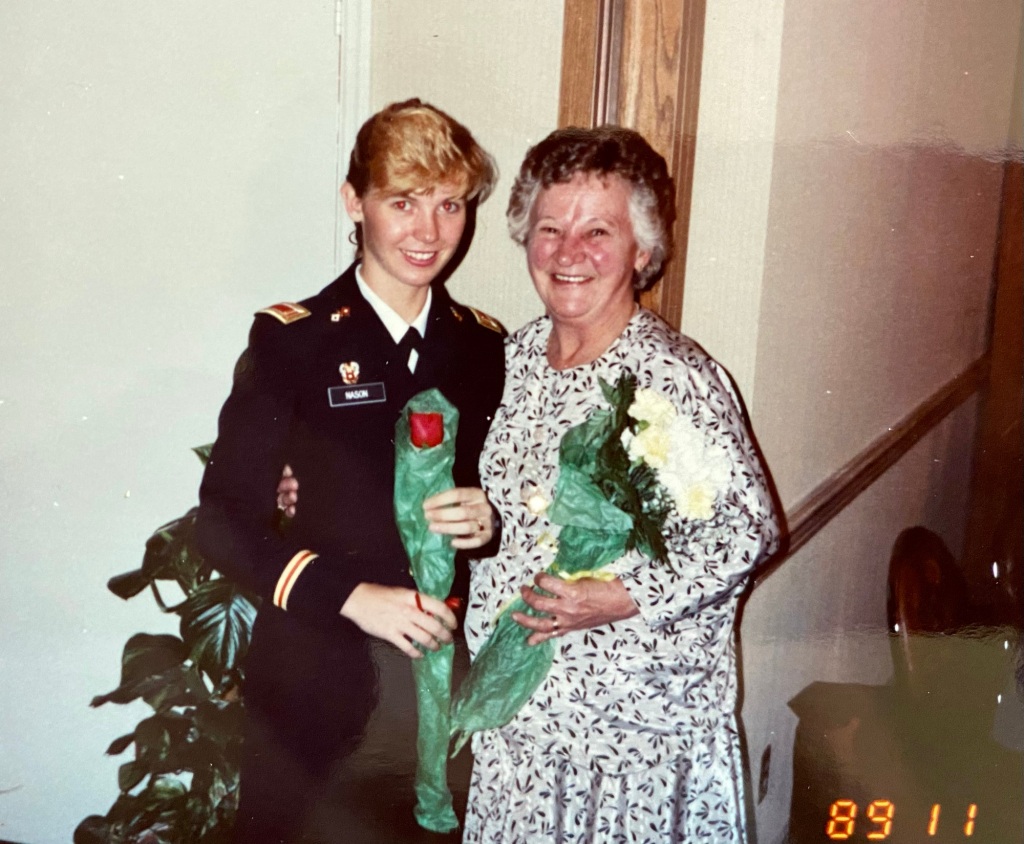
My Mom and I at Ft Gordon, GA in 1989.

Solving for X

As a proud member of Generation X, I sat in a café at Hotel V in Amsterdam and pondered the meaning of the red, black and white XXX flags I kept seeing on the boats and buildings of the beautifully damp city.   I asked the Dutch waitress (probably Gen Z) what the significance of the 3 Xs was, and she said she didn’t know but she came back 20 minutes later to explain that it represented the three values of Amsterdam- Valiant, Steadfast and Compassionate.

Flags flying at Hotel in Amsterdam

After doing more research on the topic, I learned that the Xs are taken from the coat of arms of Amsterdam which consists of red shield with three silver (white) St. Andrew’s crosses on a black stripe, the imperial crown of Austria, two golden lions and the motto of the city– Heldhaftig (heroic), Vastberaden (resolute), Barmhartig (merciful).

So the mystery was solved and I was happy to know that the triple Xs didn’t represent the infamous red-light district of Amsterdam!

The letter X has been on my mind lately and certainty front and center in the news as Elon Musk boldly rebranded the company Twitter to X.  Mr. Musk even erected a huge, white light X sign on the top of the HQ building in San Francisco, which the city ordered him to remove within 3 days.   

The future of X is unknown but it’s eXciting nonetheless.

Other reasons I’ve been interested in all things X lately are:

1) the generational differences and challenges among Baby Boomers, Gen Xers, Millennials and Gen Zers.

2) the focus of the biology of female sex chromosomes XX in the context of Transgender ideology and the Save Women Sports movement.

 3) the many symbolic, mysterious and seemingly opposite meanings:  harmony and balance, censorship and porn, toxicity and error, and death and rebirth.

What does it all mean?

As an eager student in 8th grade Algebra class, I was always excited when I would “solve for X”.  I loved setting up the equations and writing out the values of the known variables.  The challenge was a fun puzzle that made sense to me.

As a driven IT professional and sci-fi nerd in the 1990s, I was a super fan of the X-Files and even changed my hairstyle and color to emulate Agent Scully.

As a curious traveler and writer, I marvel at the rich history and meaning in the Old World’s art, flags, and symbols.

Photo by Pixabay on Pexels.com

X marks the spot of the buried treasure and is clearly the Most Powerful Letter in the alphabet. Its countless meanings in the areas of science, algebra, sports, astronomy and spirituality. Symbolizing Danger, a Kiss, a Strike, the Unknown, Death, Transcendence, Poison, Sex, and Rejection– this letter is amazingly mystifying.

There is so much more to share on this topic, but I like to keep my blogs short, so I’ll end with this.

As an inquisitive member of Generation X, I feel more affinity than ever to the extraordinary letter X.  People born between the years 1965 and 1980 tend not to want to be defined and don’t like labels (especially “latchkey kids”).  I do agree that most Gen Xer are independent, resourceful, and flexible. Plus, my generation inspired the incredible series Stranger Things 

While I don’t think I’ve Solved for X in this brief article, I have exposed more of its significance and history.

I encourage you to explore more on the magical meaning of X and perhaps you can solve for it.

Keeping the Faith with Poppies in May

May is the month for poppies in the U.S.A.   These simple, red flowers represent so much passion and emotion that I often marvel at their worldwide impact.  Millions of members and supporters of veteran organizations like the American Legion and the VFW distribute handmade paper poppies in the lead up to Memorial Day (the last Monday in May was declared a U.S. federal holiday in 1971). 

For almost 100 years, the poppy has been a powerful symbol of remembrance, respect and honor for military veterans in the UK, Canada, France, Belgium, Australia, New Zealand, and the United States.

For many, the red poppy represents sacrifices made in the defense of freedom.

Photo by Brenda Smull

For me, the month of May is a time of solemn tributes and memorial services for veterans who have lost their lives while serving their country and more personally, for my father, who passed away on May 2, 2003.

Fifteen years ago this month, I gave an impassioned speech at the Austin Toastmasters club titled “In Flanders Fields”.  I opened with a recitation of the powerful World War I poem by Canadian Lt Col. John McCrae and told stories of how important the red poppy and the solemn Memorial Day traditions are to me and my family.  

This year I share an excerpt of the poem “We Shall Keep the Faith” written by an American woman named Moina Michael in 1918.

We cherish, too, the poppy red
That grows on fields where valor led;
It seems to signal to the skies
That blood of heroes never dies,
But lends a lustre to the red
Of the flower that blooms above the dead
In Flanders Fields.

Photo by Steve Smull

In keeping with the spirit of this poem and the opening thoughts of this article, below is a portion the First Vice Commander report I submitted for my American Legion Post’s newsletter.

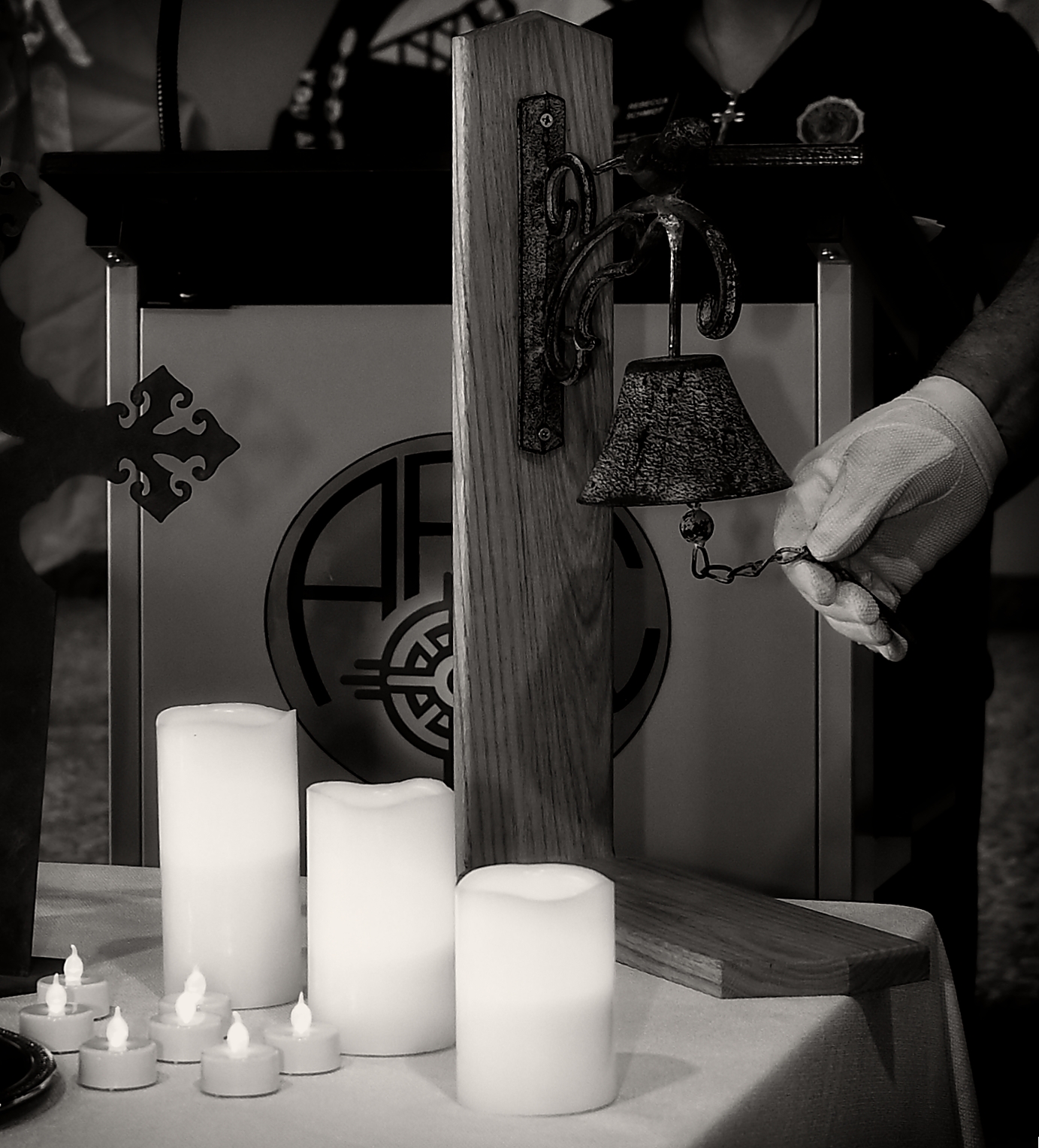
“Across the country, May is an important month of remembrance which culminates in the Memorial Day holiday and tribute ceremonies. American Legion Post 64 continued with its annual tradition of holding an Honor and Remembrance Service during our May 17th member meeting. This year we rang the bell and called out the names of ten post and auxiliary members who passed away in the last year. This experience was especially impactful for me, since I participated in an honor guard ceremony and penned tribute articles for three of the deceased veterans. It was a simple, solemn and touching ceremony that gave our fellow legionnaires and auxiliary members the honor and respect they deserve. The meeting room was tastefully set up with a remembrance table of photos, programs and red roses for the family and friends of the deceased. In front of the lectern was an honor table with a beautiful wrought iron cross, candles, a Bible, a Koran and a yarmulke. Red poppies stood out brilliantly against the white tablecloth and added the strong and significant symbol of loss, sacrifice and hope.”

Photo by Steve Smull

Why I Served and What’s Important

As I reflect on Women’s History Month, I wish I had met and been able to talk to my grandmothers. They were born around the turn of the last century and passed away long before I was born in the late 1960s.

From the stories passed down from my parents, aunts and uncles, my grandmothers were strong, stoic, and determined women who endured great hardship, made sacrifices, and cared of their large families during a difficult time in U.S. history.

Both my grandmothers saw most of their sons head off to war in Europe and Asia during the Second World War. 

My paternal grandmother, Elise

Below is an excerpt from chapter 6 of my book Strong Words and Simple Truths: The Courage to Communicate.  The theme of the chapter is Veterans and Remembrance- The Strong Man.

“The first veterans I admired were my father, uncles, and cousins that served in the U.S. Military. Most of them, my dad included, were deployed across the globe to fight for freedoms during World War II. Their strength and resolve inspired me to become a leader and a servant to others. They were my role models of what it meant to be an American.

The idea of selfless service was instilled in me at an early age as I watched my parents and my dear cousins Joey, Patty, and Richie, volunteer for countless events at the local Veterans of Foreign Wars (VFW). Although my small hometown was only a few square miles, it was home to not one but two veteran organizations—The American Legion and the VFW. Every year when I was growing up, our town would have a Memorial Day parade that concluded at one of these two posts. In my family, Memorial Day was a special day marked by a solemn remembrance ceremony in the local cemetery. 

My time on active duty in the U.S. Army in the early 1990s was relatively short and painless, but it left a lasting imprint on my perspective, leadership style, and values.

The veterans I have encountered have a strong sense of integrity and commitment to their families, friends, and community. They are a tough and resilient lot who are some of the most kind, generous, and boisterous people I know. “

Why did I join the US Army?

I’m not sure what possessed me to wander into the Army ROTC building on the college campus of Rutgers University at the end of my freshman year, but I filled out an application for an ROTC scholarship on the spot and quickly received word that I’d been accepted into the program that would commission me as a 2nd Lieutenant once I graduated.   I didn’t tell my parents what I was doing until after I was accepted.  They were both excited and happy for me.  I was the 4th out of 5 children and the only one to graduate college and serve in the military.  My strong, supportive mother, who was a civilian, inspired and motivated me to reach for the stars.

Looking back, I think there were three primary reasons why I signed up for military service in 1986.  One was to help my parents with the cost of my college education, the second was my desire to see the world, and third was the sense of duty to my country that my family instilled in me.  

I served as a Signal Platoon Leader with the 1st Cav Division during the Gulf War and spent 10 months in the middle of nowhere in northern Saudi Arabia and southern Iraq.  My platoon consisted of 70 soldiers and our mission was to establish mobile communications for the tanks and command Humvees in the division.

Me in Iraq in March 1991

What is important to me now?

Assisting and advocating for our veterans, like my parents did, has been my top priority for last 30 years.   The incredible amount of civilian support I received made my transition out of the military easier and less traumatic.  Positive veteran champions surrounded me and gave me the encouragement and tools I needed to succeed in my corporate career.  Having employers that understood, appreciated, and leveraged my military skills truly helped to enhance and propel my business advancement.  

I continue to be active in veteran organizations like the American Legion where I strive to keep my parent’s sense of Selfless Service alive in the community. 

Supporting companies like Vanguard Veteran whose mission to equip civilians to become veteran champions is important to me as I look to expand my involvement in community and veteran outreach programs.

Now, more than ever, it is vital that we remember and honor those who have come before us and sacrificed for our rights and our freedom.   I am sure that my grandmothers and my parents would be smiling with approval.

At a VFW in Denver, CO. Photo by Steve Smull

1st CAV in the Desert

I served as a Platoon Leader in the 13th Signal Battalion, 1st Cavalry Division during the first Gulf War. We deployed from Ft Hood, TX in October 1990 to Saudi Arabia and then Iraq for the short ground war in February 1991.

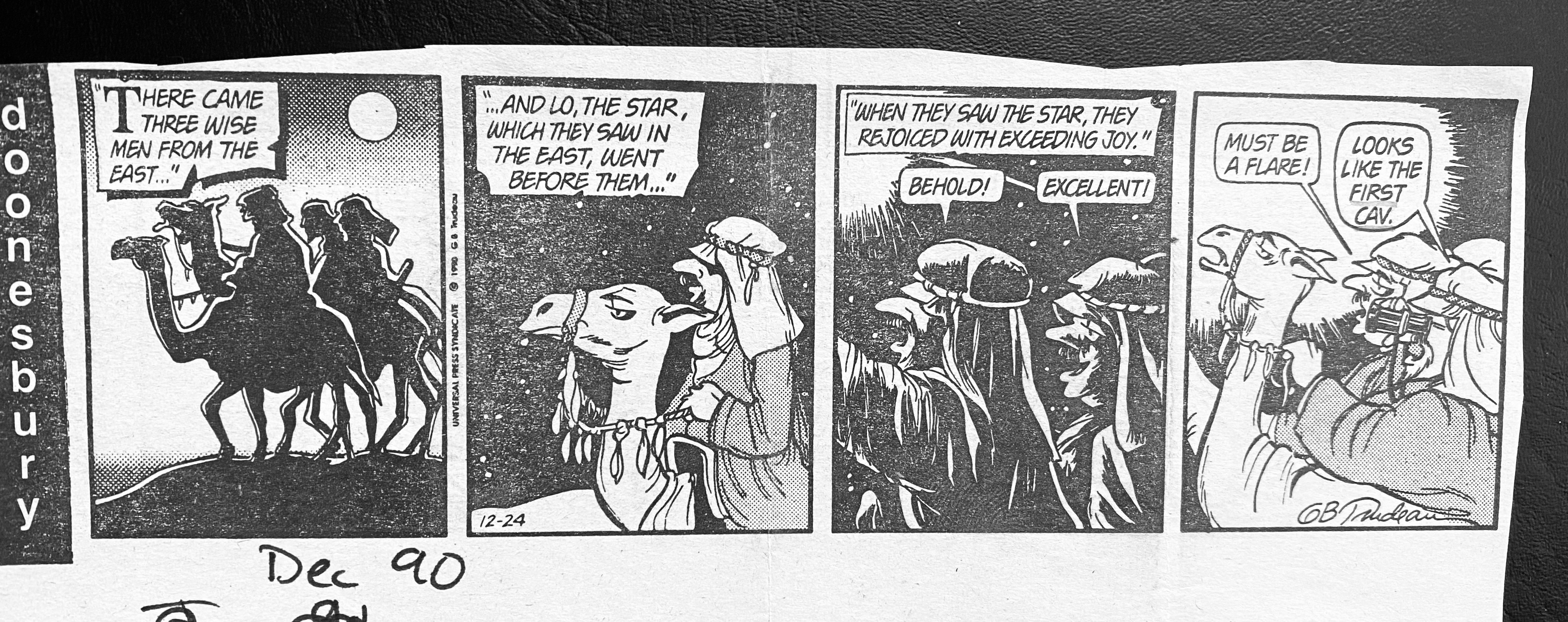
At age 23, it was strange and unsettling to spend Christmas away from my family and in the middle of the desert. The night skies were amazingly dark and full of more stars than I had ever seen. The occasional camel sighting did remind we of the three wise men headed to Bethlehem.

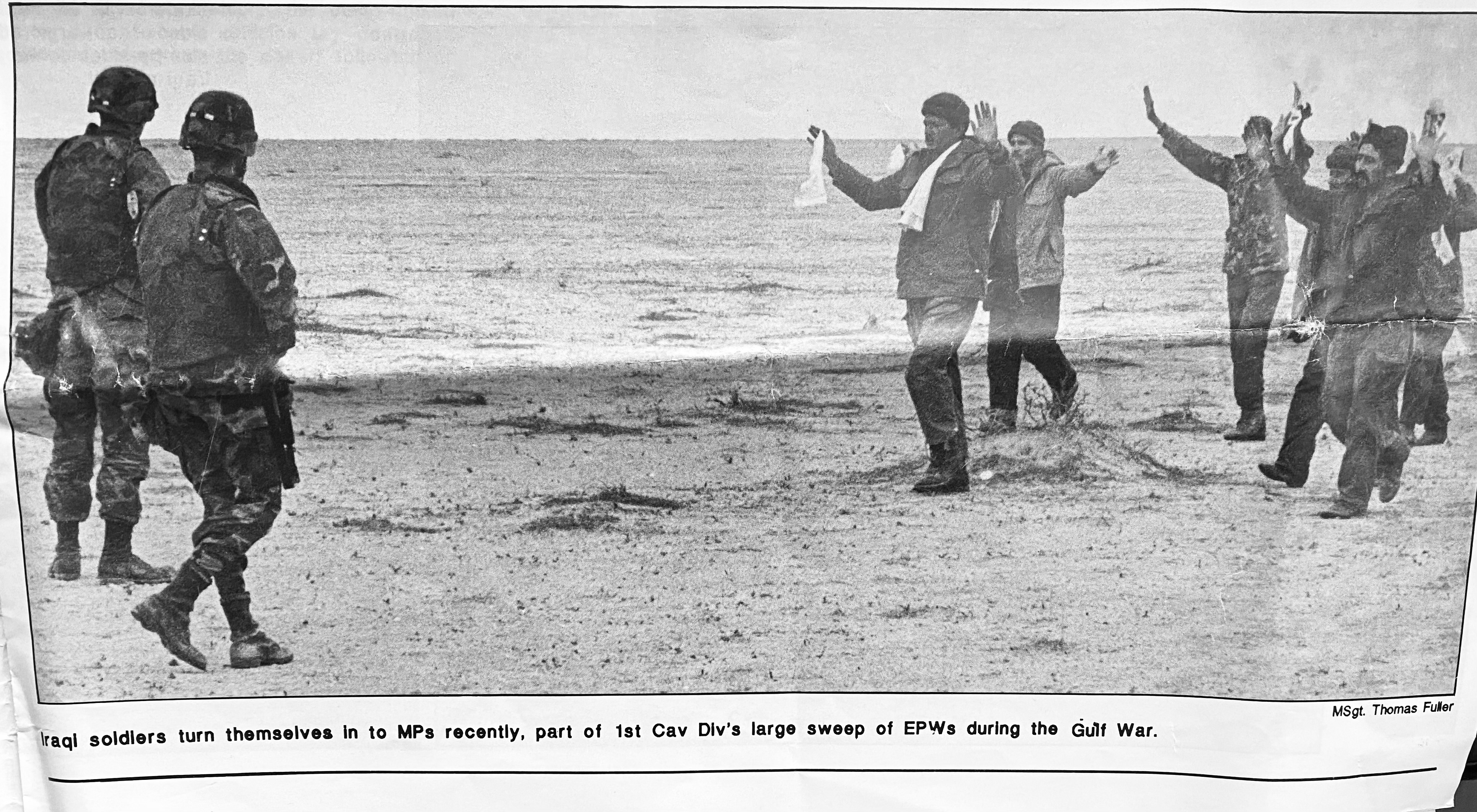
The last panel in Doonesbury cartoon below made me laugh. I found this newspaper clipping in my journal from 1990. I didn’t remember having it and probably haven’t seen it in over 30 years.

I was recently interviewed for the Rutgers Oral History Archives about my experience. Below is an excerpt from the transcripts.

KR:  At the end of your first interview, we left off talking about Operation Desert Storm.  What I would like to ask you about first today is, what are your recollections of Operation Desert Storm and the invasion of Iraq? 

BS:  I think the biggest memory and impact was in January of 1991.  We had been in Saudi Arabia since October, just sitting, waiting for the invasion.  We were in northern Saudi Arabia.  I just remember when the ground war kicked off.  We didn’t have any news.  We didn’t have TV or radio like have today, but I do remember seeing and hearing these–they were called MLRS [multiple launch rocket system]–these rockets, and they went off many at a time, and the lights, just watching these rockets take off, knowing they were going north into Iraq as we attacked, and just thinking, “Wow, how much destruction and/or death is occurring at the end of that?”  It was really bizarre and surreal, but that was the only thing I remember and I saw at the time.  It was scary that first night.  We didn’t know if we were going to get attacked with Scud missiles that had chemical or nuclear/biological weapons.  We were mostly scared of chemicals at the time, but it could have been biological.  [Editor’s Note: On January 17, 1991, U.S. and coalition forces launched Operation Desert Storm with a campaign of air and missile attacks on targets in Iraq and Kuwait.]

I do remember the first night, and that was really the only night that I slept in my mask, my gas mask, and the full protective gear.  It wasn’t too hot.  It was January, luckily.

KR:  Were there any religious services when you were in Saudi Arabia or Iraq?  Were there chaplains around to do religious services or counseling? 

BS:  In Saudi Arabia, we were told to not have any outward displays of religion, Christianity, Judaism.  We did, in our tents, have some Christmas [trees], but, again, it wasn’t [extensive].  There were chaplains, but, again, they were told to not put their insignia on their uniform.  As I recall, the officers that were chaplains would have their rank on one side and then you would have your unit on the other, but I think they had either a cross [or] Star of David, and they were told to cover those.  I don’t recall ever talking to a chaplain, seeing them.  I suppose, if it was needed and someone needed counseling, we could have called into the DMAIN, the centralized rear command, and asked for it, but we didn’t need it.  The same for doctors and nurses and medical.  I’m sure these support units were there if we needed them, but I didn’t interact with them either.  We were forward operations. 

For women, we were in the frontlines with our communication vans.  In fact, there were Iraqi soldiers surrendering to some of the units that were in my platoon, and it was a woman that they surrendered to.  She was the sergeant of this little remote radio tower.  It was her and three other soldiers who were men, but Iraqi soliders surrendered to them.  For me, I was like, “Wow, a Muslim man from Iraq just surrendered to a woman, an American woman.”  That was kind of interesting. 

KR:   My next question you have touched upon a little bit in some other questions that we have asked you.  Once Operation Desert Storm was being launched and the invasion of Iraq, what were your experiences like and the experiences of your unit? 

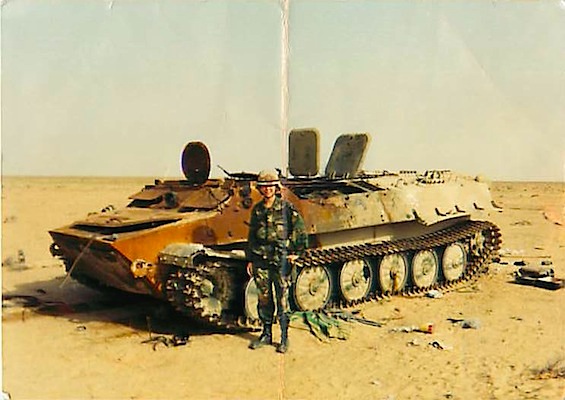
BS:  Once the big launch in January occurred, we left our base, where we had been for many months in northern Saudi, and we convoyed north into southern Iraq.  We left in the middle of the night.  I just remember driving in this huge–it was a deuce and a half–a two-and-a-half-ton truck, very, very uncomfortable, for hours just driving north (20+ hours), but it was pretty exciting, because we knew this was the big thing we’d been waiting for. We’re traveling, and it’s exciting because we’re seeing other tanks and units from Britain and other countries alongside us traveling in the same direction.  Then, we got to a location, and we stopped.  This was where we were going to set up our communications.  I only have one picture from the whole war.  There was a burned-out military–it looked like a tank and it was an Iraqi tank and there were dead Iraqi soldiers on the ground.  It was taken out by a U.S. missile or an Apache.  My soldiers had to call and get body bags and put them in.  I made a decision that I didn’t want to see the bodies, the corpses, because I didn’t want it to stick in my mind.  I didn’t go near it, but we set up camp maybe a hundred meters away from that.  It was kind of creepy to be there.  We were there thirty, forty days.  We stayed there, and it wasn’t long before we won the war decisively.  We were all told, “Okay, time to go home now.” 

More stories and memories to come in my next blog.

Monsoon Winds & Stormy Memories from Saudi Arabia in 1990

I am excited to announce that in October 2022, I will be inducted into the Rutgers Oral History Archives- ROHA (https://oralhistory.rutgers.edu/) in New Brunswick, NJ. This is a great honor as my story will be documented and included with the accounts from hundreds of fellow veterans from the conflicts of WWII, Korea, Persian Gulf War, Cold War and Afghanistan.

In April 2022, two strong and articulate women from the Department of History at my alma mater, Rutgers University, interviewed me about my family history, campus ROTC life, and military experience in the Gulf War.

Me in Southern Iraq, February 1991

A bit about ROHA from their website:

Since 1994, the Rutgers Oral History Archives (ROHA) has been recording the life narratives of:

  • Alumni and/or New Jersey residents who served during times of conflict
  • People with a story to tell about New Jersey’s rich social and cultural history
  • Men and women who helped shape the history of Rutgers University

ROHA’s digital archive features 1,202 life course oral history interviews and over 32,000 pages of fully text-searchable transcripts.

Here’s the cover page of the first interview transcript.

RUTGERS, THE STATE UNIVERSITY OF NEW JERSEY

NEW BRUNSWICK

AN INTERVIEW WITH BRENDA SMULL

FOR THE

RUTGERS ORAL HISTORY ARCHIVES

INTERVIEW CONDUCTED BY

KATHRYN TRACY RIZZI

and

GWEN ALLEN

PHOENIX, ARIZONA

APRIL 12, 2022

Below is an excerpt of my response to a question about my experience during Operation Desert Storm:

“I was there for about ten months.  Saudi Arabia and Iraq, in those months, there were seasons where there were monsoon rains and winds.  I’ll never forget, one time, I’m in my tent, and a huge windstorm came.  It literally blew the tent off me, and it’s just me on a cot in the middle of the desert.  That was quite interesting.  Everything you owned was in two duffel bags, so you didn’t have a whole lot of clothing.  We did have services that occasionally helped launder our clothes, but, oftentimes, we would wear the same pants for days, and I did not take a shower every day.  Then, when we went into Iraq, water was limited.  I remember, I went thirty days without a shower.  As a woman, that wasn’t as ideal.  We had birdbaths, but for anybody who’s been camping, birdbaths are good for like two or three days.  Thirty days is a whole other experience.  Again, I was young.  I survived.  It wasn’t that bad, but it was just very uncomfortable.  Your body doesn’t stop doing what it does, even though you’re at war in the middle of a desert.  That was that experience.  That’s why I was always envious [that] the Air Force people were in buildings, at least most of them were, and I didn’t get to be in any buildings.  

At the end, when we were leaving the country in April 1991, we went to Khobar Towers, which is actually famous because later, a few years after I was there, there was a big bombing there.  Khobar Towers were in Saudi Arabia, there was a big bombing, and I believe some were killed and injured.  I was only there for a week or two before they flew us back home.  That’s the story about that.  [Editor’s Note: On June 25, 1996, a truck bomb detonated near the Khobar Tower housing complex in Dhahran, Saudi Arabia, killing nineteen members of the U.S. Air Force and injuring over four hundred American and coalition military personnel.  The Khobar Towers housed coalition forces engaged in Operation Southern Watch, the no-fly zone operation in Southern Iraq after the Gulf War of 1990-1991.
]”