Confessions of a Scrum Master, Part 3: User Story Happiness & Success

As a user story, I want the respect I deserve so that I don’t develop an inferiority complex.

Oh the user story! You either love it or you hate it. You understand it or you are totally perplexed and frustrated by it. The must fundamental and core element of the Agile process is often misunderstood, under appreciated and misused.

The User Story, child of the Epic and parent to the Task, occasionally suffers from an identity crisis. Last month I happened upon a sad and lonely 8-point story who had only one 0.5 hour task linked to it. It confided in me that it was really a Task masquerading as a User Story but it was too ashamed to tell anyone.

The role and purpose of the user story can sometimes be misunderstood to the point of causing heated conversations and disagreements among Product Owners, Business Analysts and Scrum team members who are new to the Agile process. Here the Scrum Master’s coaching and facilitation of the Agile process is critical to the success and happiness of the team (and the user story).

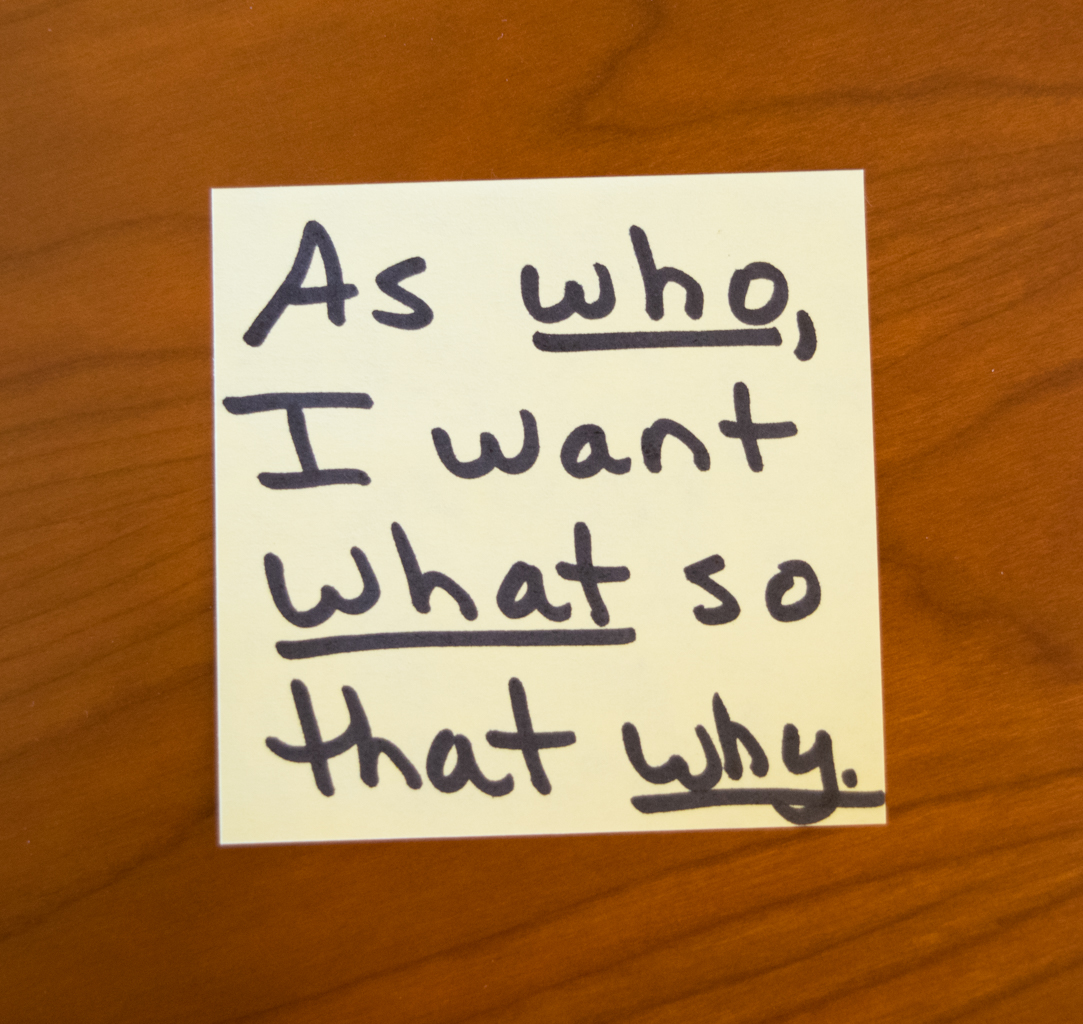
As a user story, I want to define an incremental unit of work in the “who, what and why” format so that the scrum team can efficiently deliver the requirements by the end of the sprint.

whowhatwhy_userstory


As a user story, I want to represent a small piece of business value so that the Product Owner can see the iterative development of the work.

As a user story, I want to describe high-level requirements in such a way that  it sparks conversations among the scrum team members.

As a user story, I want to have detailed acceptance criteria so that the team knows the definition of done and exactly what is expected at the end of the sprint.

As a user story, I want to be groomed and refined on a regular basis so that I will be properly understood, stack ranked and sized by the scrum team.

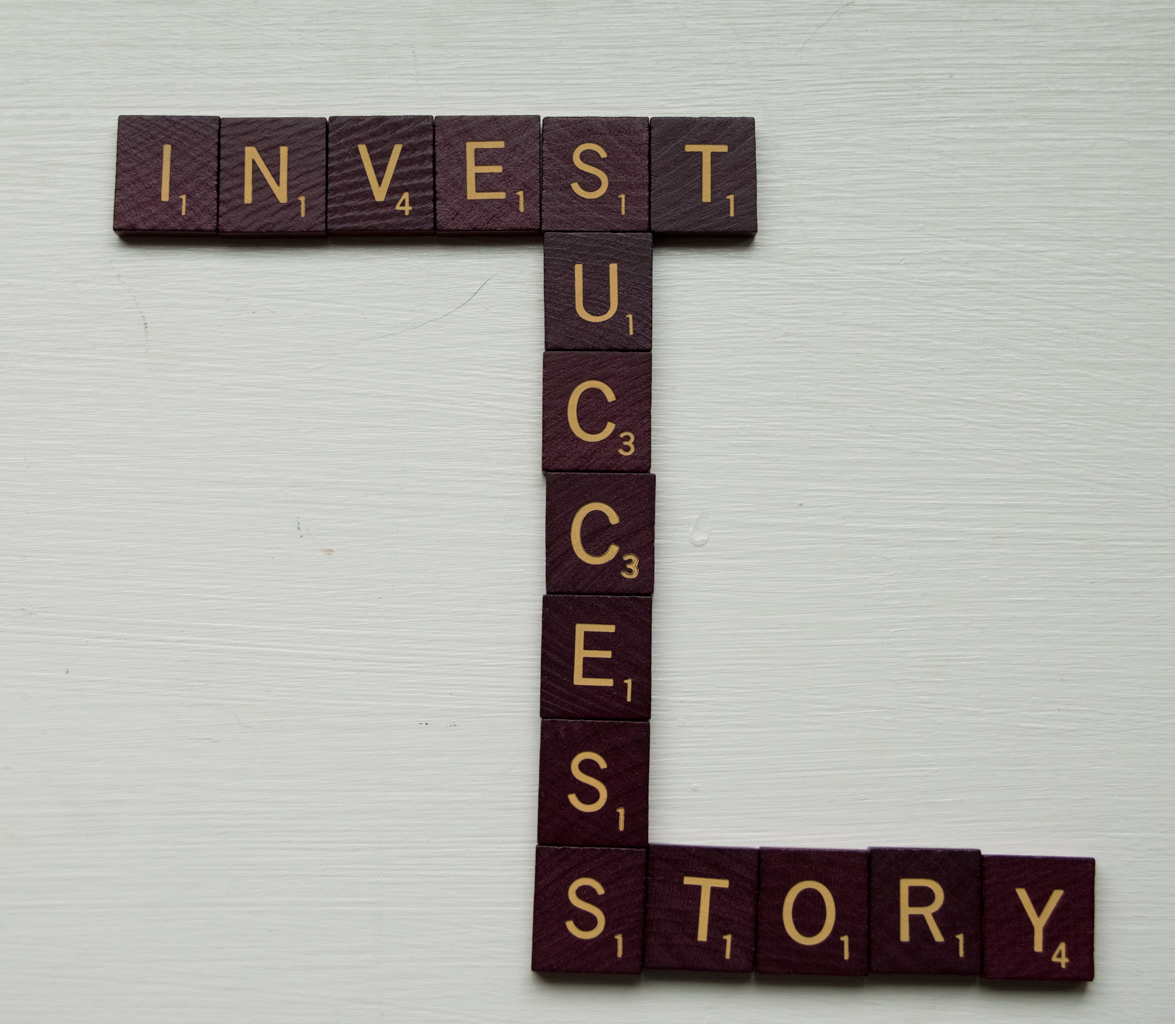
As a user story, I want to meet the criteria of Bill Wake’s INVEST acronym so that I can be well formed and have high self-esteem.

INVESTuserstory2

Acceptance Criteria of this INVEST story:

  • Independent
  • Negotiable
  • Valuable
  • Estimable
  • Scalable (small sized)
  • Testable


As the author of this blog,  I want to share my thoughts and insights about user stories so that you learn in a fun and memorable way!

Confessions of a Scrum Master, Part 2: The Requirements Challenge

Alternate title:  Oh the joys of documenting requirements on a new Agile project!

Many organizations struggle with adopting Agile since it requires such a fundamental and overarching shift in business process.  Often times the biggest challenge with the new process is how to gather and document Requirements.   I’ve observed that a piece meal approach to implementing Agile is not as effective since the performance benefits are not fully realized unless all Scrum team members and stakeholders are on board. So how do we get everyone on board?

First, it can be helpful for Scrum Masters to recognize that the Agile manifesto value of “Working Software over Comprehensive Document” is a struggle for many Project Management Offices ( PMO) and Business Analysts (BA). Organizations and firms which are heavily regulated have strict requirements on detailed project artifacts in order to pass audits and the PMOs and BAs are oftentimes the creators and/or keepers of these documents. In short, it’s a balancing act to the find the appropriate and agreed to level of documentation that meets everyone’s needs. These discussions and agreements can take place during Sprint 0 and reviewed in the Release Planning meeting.

UnicycleSDBC2004


Waterfall/RUP documentation habits die hard with some seasoned BAs. The urge to analyze, research and detail out full use cases and system requirements prior to the start of sprinting can be strong for those who are new to iterative development and User Stories.   The Scrum Master’s coaching and guidance on the Agile best practices for User Story creation and refinement are critical to keeping the project moving along and not getting bogged down in analysis paralysis.

And then is there is the battle of what tools to use to document and where to store the project and requirement artifacts. Boy can opinions and passions run hot in this area!   Whether you use TFS, Rally, Jira, VersionOne, PivotalTracker or any other application for tracking your User Stories, sprint tasks and velocity, your Scrum team and the Project stakeholders need to understand and come to an agreement that certain Requirement Documents of Record can should be stored, tracked and linked to in other repositories like Sharepoint or Blueprint.   Traceability is a key concern for many organizations and should be addressed in your Team Agreements and processes.

The Goldilocks Dilemma

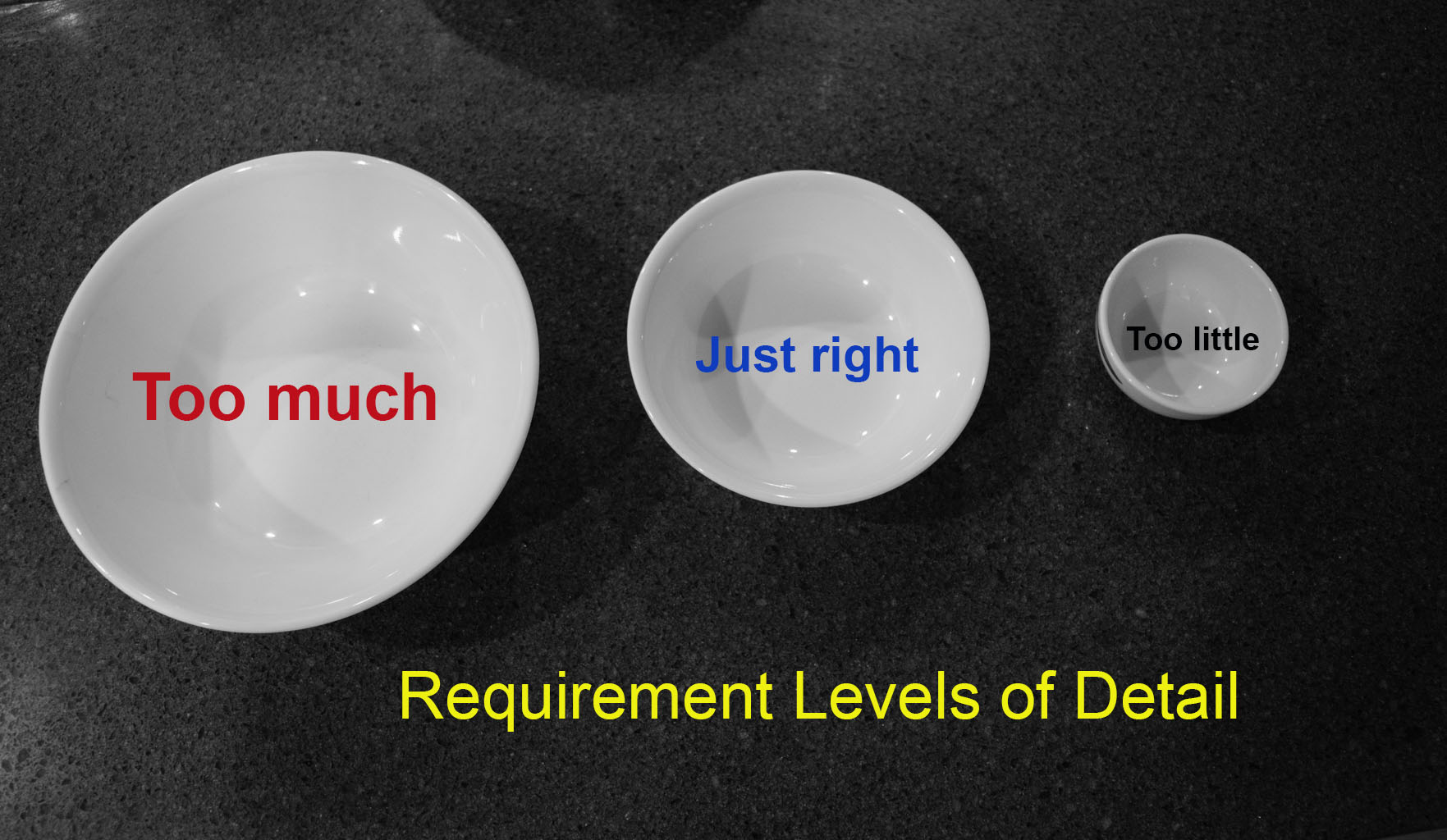
How much detail do we need to put in a User Story? This is another deeply philosophical question and everyone seems to have a different opinion on it.

How much is too much? How much is too little?   What level of information and detail is just right?


3bowlsv3

As Scrum Masters, our role is to strike the right balance with the Product Owners, BAs and PMs so that the needs of the organization are met without sacrificing the benefits of the iterative design and development. This is certainly easier said than done but know that you are not alone in this challenge.

It helps to explain that details on the requirements will be uncovered and documented in a more collaborative manner with ongoing conversions and meetings with the entire team. Requirements will not be created in a vacuum and will be refined /groomed/ sized by the scrum team.

It occurs to me that this topic is important and meaty enough to deserve its own article, so I’ll dive into the details of User Story Creation in Part 3 of my “Confessions of a Scrum Master” series next week.

The behavioral changes involved in adopting the Agile can be uncomfortable and difficult for many people and teams. Documenting requirements in Agile often requires a significant shift in process and the Scrum Master’s coaching and facilitation role is critical to helping the team to learn and understand the value and benefits of iterative development while allaying their fears and concerns about the “new and different” way.


Confessions of a Scrum Master

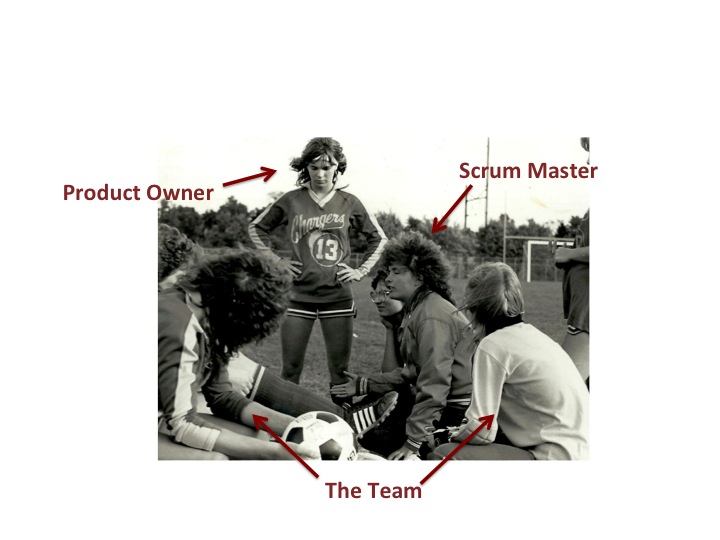
Every thing I needed to know about being a good Scrum Master I learned from my high school soccer coach, Miss Lonegan.

Slide1

Here’s what was instilled in me on a muddy soccer field in the early 1980s.

Great coaches and leaders:

  1. Motivate and help the team to be successful.
  2.  Walk with the team, on the field, everyday.
  3.  Teach others the process by sharing fundamental tasks and techniques.
  4.  Guide the team without being overly controlling.
  5.  Communicate positively.

These successful actions and traits recently dawned on me when I realized how important Personality and Temperament are to being an effective Scrum Master.

Over the past 5 years, I have been observing team dynamics as a Scrum Master (SM) on multiple teams in 3 different companies and have witnessed a number of SMs crash and burn due to not leading like good coaches. Lack of communication and soft skills were also a common theme with the ineffective Scrum Masters.

The most successful SMs are true team players and are comfortable surrendering control to the Product Owner and team. Adept Scrum Masters truly view their role as being in service to the team, removing obstacles for the team and helping them to be successful.

Facilitation is another important role of the Scrum Master and requires a high level collaboration and strong, tactful communication skills.   The authoritative, directive, ” my way or the highway ” approach does not work well with Scrum teams.

Project Managers can sometimes get away with a lack of soft skills but Scrum Masters, who are facilitators and coaches, cannot.

In the Retrospectives with our team, I ask them to think about the Results, the Experience and the Process of Agile and the sprint. I view my Scrum Master role as critical to helping the team to not only achieve great results (velocity) but to enjoy the experience and the process- just like my high school soccer coach did all those years ago!

Letting The World Know

A good Public Relations (PR) team shares and communicates the value of their organization to the outside world in a compelling way with impactful and inspirational stories and images.

The heart and soul of  Toastmasters International’s mission is to provide and foster a supportive environment where members can find their voice and share their stories.

BrendaLogo2011

As I clarified in my mind the message I want to share with the world about Toastmasters, I wrote this short poem.

 “How lives are changed

How barriers are overcome

How bridges are built

How connections are made

How fear is tamed

How dreams are realized

How goals are reached

How friends are made

How community is strengthened.

At Toastmasters, I am letting the world know,

How Leaders are Made.”

This year marks my 20-year anniversary at Toastmasters and I am honored and excited to be the Public Relations Officer (PRO) for District 26.

Please share with me your stories about ways in which being a member of Toastmasters has benefited you and others you know in Toastmasters.  Reach me at Pro1415@d26leaders.org .


Leadership Challenges in Volunteer Organizations

Strong leaders are critical to the success of any organization- be it a non profit,  a corporation, a military unit,  a church or a bicycle club.   I believe that successful leaders can be developed and nurtured through mentoring, coaching and training but I have recently witnessed how unchecked power and bloated egos can corrupt leaders of volunteer groups.   Over the last 20 years, I’ve been a member and/or  officer in numerous nonprofit and corporate organizations and have seen a negative trend in leadership ethics.

Since college I have had the honor and privilege of serving under many inspirational officers, managers and executives who truly embodied the values of respect, humility and service.   These altruistic and motivational men and women were my role models and taught me the importance of recognition, encouragement, honesty and integrity.   They taught me to stay focused on the team member’s needs above my own.

In the past few years, I have become concerned by the increase in the frequency and negative impact that “corrupted” leaders are having on their organizations (this is across the board in society-  from the local nonprofit and school board to the state and federal governments).   There are more power-influenced leaders today and fewer selfless ones. There is more Me and less We and that’s not the way it should be!  Another disappointing theme I’ve observed recently is a misplaced focus where the officers of organizations are more concerned about their own power, titles and agendas with little priority or attention given to the actual members.

Leadershiparrow

I recently wrote a speech and created a presentation entitled “Leadership Challenges in Volunteer Organizations”  where I outlined issues, impediments and possible solutions to address membership growth and retention concerns in non profit groups like Toastmasters and the VFW.   I sadly will cite the destructive and non-collaborative behaviors of power trips, politics and petty personal attacks as key factors negatively impacting the morale and growth of many well meaning, non profit groups.

Solutions to these issues are often difficult to implement in a broad sense since they need to come from within the individual leaders however,  a positive organizational culture coupled with strong team agreements can go a long way toward improving a group’s leadership challenges.   An unwavering commitment to the organization’s  core Mission, without compromise, is also a critical to ensuring that ethical leaders are rewarded, encouraged and attracted.

Here are the Mission Statements of two organizations I am a member of:

“Provide a supportive and positive learning experience in which members are empowered to develop communication and leadership skills.”

 “ To serve our veterans, the military and our communities.  To advocate on behalf of all veterans.”


Notice that nowhere in the statements above does it mention the role, power or importance of the leaders or officers of the group.  They are solely focused on the members of the organization.  Losing sight of this simple fact is what I believe is causing many of the leadership issues we see in our volunteer organizations today.

Perhaps this message and blog can reach others and be shared in order to make a positive impact in our communities and non profit groups.  I hope so!

A Fresh Look at Retrospectives

It’s been a few months since I wrote the Agile Life series and I came across a new way to think about Sprint Retrospectives.

What if we asked these 3 questions at the end of every life sprint ( 2-4 weeks)?

1. What am I going to start doing?
2. What am I going to stop doing?
3. What am I going to continue doing?

Food for thought Grasshopper…..

20140507-145514.jpg

A Story to Tell: Changes, Connections and Mirror Neurons

What inspires you to take action?  A Poet and a Colonel motivated my first blog of 2014. It all started when I attended a stimulating interactive  workshop last Saturday called STORY UP.  Sharon and Norm Frickey, who I share adventures with in Toastmasters and the Veterans of Foreign Wars (VFW), facilitated the session.  During the workshop, they delved into the intricacies of mirror neurons and expressed the importance of “Finding your story in the experience” and sharing it with others in order to bridge awareness gaps.   They explained how story telling increases connectedness with our fellow humans.

Sharon passionately moved me when she said, “A story told with purpose and an authentic voice can change the world”.   This writer’s workshop was a strong Call to Action and has prompted me to share my stories.  Could I possibly change the world?

Sharon reflects on mirror neurons

Sharon reflects on mirror neurons.
Photo by Steve Smull.

Last night I gave a speech entitled “Traditions and Changes- the Last Quarter of a Century “ at my newly joined Titan Toastmaster club.  During the speech I realized the power and importance of telling a story.  I connected with my audience on many levels when I shared my 25 year journey from college, to the Army, to War deployment, to the VFW and to Toastmasters.   I explained that there is an interesting dichotomy in mind because I am a traditionalist who embraces change and new technology and I am an agile technophile who often longs for many old fashioned traditions.

In my speech I had fun with props as I detailed the numerous technological changes over the last 10 years and how it has altered the way that we communicate with one another.   I displayed my cell phone, iPod, Kindle, and iPad and contrasted them with the tossed-aside printed newspaper, vinyl LP record, a cassette tape and paperback novel.  I shared that although I have adopted and use all the most recent technological devices to communicate, I still value and yearn for live, verbal communications with my friends, family and colleagues.  One of the reasons I love Toastmasters so much is because it provides a warm, friendly environment to speak with others in a supportive setting.  Live, real-time dialogue and interactions with honest to goodness humans who actually smile, nod and react to my words and actions.  Wow- what a concept. 

It was heart warming and refreshing for me to tell a story about traditions, changes and the value and importance of how we communicate with each other.    Could the connectedness I felt during this small speech begin to help bridge the recent polarization in our public discourse?   I hope so.

Storytelling is a uniquely human experience

Storytelling is a uniquely human experience

The ability to verbalize your thoughts and feelings into a 10 minute face to face presentation is so much more fulfilling and better understood by others than a 3 sentence Facebook post or a 140 character tweet certainly is!

So here’s to STORY UP and sharing our experiences live with our fellow humans.

Thanks to Norm and Sharon for inspiring me to reach new heights of authentic expression!  My story telling has just begun.

normsharonfounders2013 640x450

The Poet and the Colonel