Self-Nourishment: Releasing for Recovery

Are your muscles tense and holding a huge amount of stress?

Is your neck screaming at you? Maybe it’s your lower back that is barking.

Life’s challenges can be extremely stressful on your physical body. So often we hold our stress in our muscles and this leads to pain and discomfort. What can you do to get some relief?

To help release and let go of your tension, I recommend the top 3 basics of walking, stretching, and yoga. Recently, I experienced great release and recovery from a fitness class at Mountainside Fitness called “30 MIN. XPRESS ROLL & RELEASE” led by Kathleen Sollars which used foam rollers and tennis balls to help us achieve the benefits of myofascial release and increased blood flow and circulation to soft tissue. I felt like a stick of melted butter after this class! It’s amazing what a bit of focused rolling and pressure point action can do. The result that night was the best quality sleep I’ve experienced in months.

To help us better understand and apply the release and recovery model, my good friend and Yoga Therapist, Nancy Martch, shares her wisdom and focuses on the importance of self-nourishment in our daily lives. More than self-care, self-nourishment is the intentional replenishment of vital energy and breath to the body. Just like it is beneficial to feed our bodies quality food and nutrients, it is equally important to fill up our body’s emotional and spiritual tanks with positive movements, reflections, and breath work. In addition to yoga and mediating, rolling and releasing can be key components to your daily self-nourishment.

Below is a slide I appreciated from a presentation crafted by Nancy, owner of Jai Yoga. As my Yoga Therapist, she has helped me to become more aware of my body and its response to external stimuli and trauma. Nancy has helped me to breathe, balance, release and accept. Yoga therapy is an outstanding way to promote health and well-being within a therapeutic relationship. To learn more , check out this video. Follow her on Facebook and Instagram @jaiyogahouston

It is my hope that you can release some of your pain and tension with these ideas and tips. Life is too short to be in constant discomfort and you deserve to have some relief.

Take care of yourself. Breathe, move, and let it go.

Self nourishment calls on the Mother within you to take action for your personal and specific needs.

Remember the 3 Rs of Roll, Release and Recover!

Namaste.

A Plateau in Unfreezing my Shoulder

It’s been over a year since my Frozen Shoulder started causing me intense pain and lack of arm motion and I thought it was time to share some updates on the recovery journey.

The majority of my healing occurred 6-9 months after stabbing, nerve impingement pain started. I believe the multiple actions and treatments contributed to my reduction in pain and improvement in range of motion but I think the most important and impactful actions were Physical Therapy and Yoga Therapy.

My current situation is overall positive for the following reasons: 1) I have no pain in my arm and shoulder, 2) I can lift my left arm directly over my head, 3) I can ride my bike and run, and 4) I can do most yoga poses.

The plateau in progress started about 10 months after my problems started and I still have limited range of motion in my left arm in certain positions. For those who are know yoga, my impacted side is not able to touch the ground when I do “cactus arms”. While standing, the angle of my left lower arm is at 30 degrees instead of 45 degrees when I have my palms facing out and my upper arms perpendicular to the ground.

My Physical Therapist has be working on my subscapularis, infraspinatus and supraspinatus muscles in my back for a while but they are still very stubborn and often unrelenting. How do I get these muscles to relax and loosen up?

My eagle arm pose is good when the right shoulder is called to stretch but fails to fly when my left shoulder is asked to take off. Some back muscles just feel stuck and still frozen.

Eagle Arm Pose

I’m not sure what to do at this point other than continue to move, stretch and work on regaining my upper body strength. I’m grateful that the pain is gone but I get frustrated and disheartened that I can’t do certain movements as a fit, middle-aged athlete. I long to do 15 push ups like I did just last year.

I know there are many women over 50 years old who have faced and endured similar changes with this painful and often misunderstood illness and I hope that this brief blog gives some people hope and insight on their own challenges.

Letting Go to Unfreeze my Shoulder

It’s 102 degrees today in Phoenix, Arizona and my left shoulder is still frozen. It all started six months ago when I noticed that it hurt to move or lift my left arm.

In the last two months I’ve made some progress toward healing my arm and shoulder and am happy to report that the stabbing pains are mostly gone and I can put on my shirt with relative ease.  My range of motion, however, is not much better than it was four weeks ago. 

I am not a patient person by nature and it’s been very hard for me to slow down and accept the fact that my left arm can’t move or function like it used to.

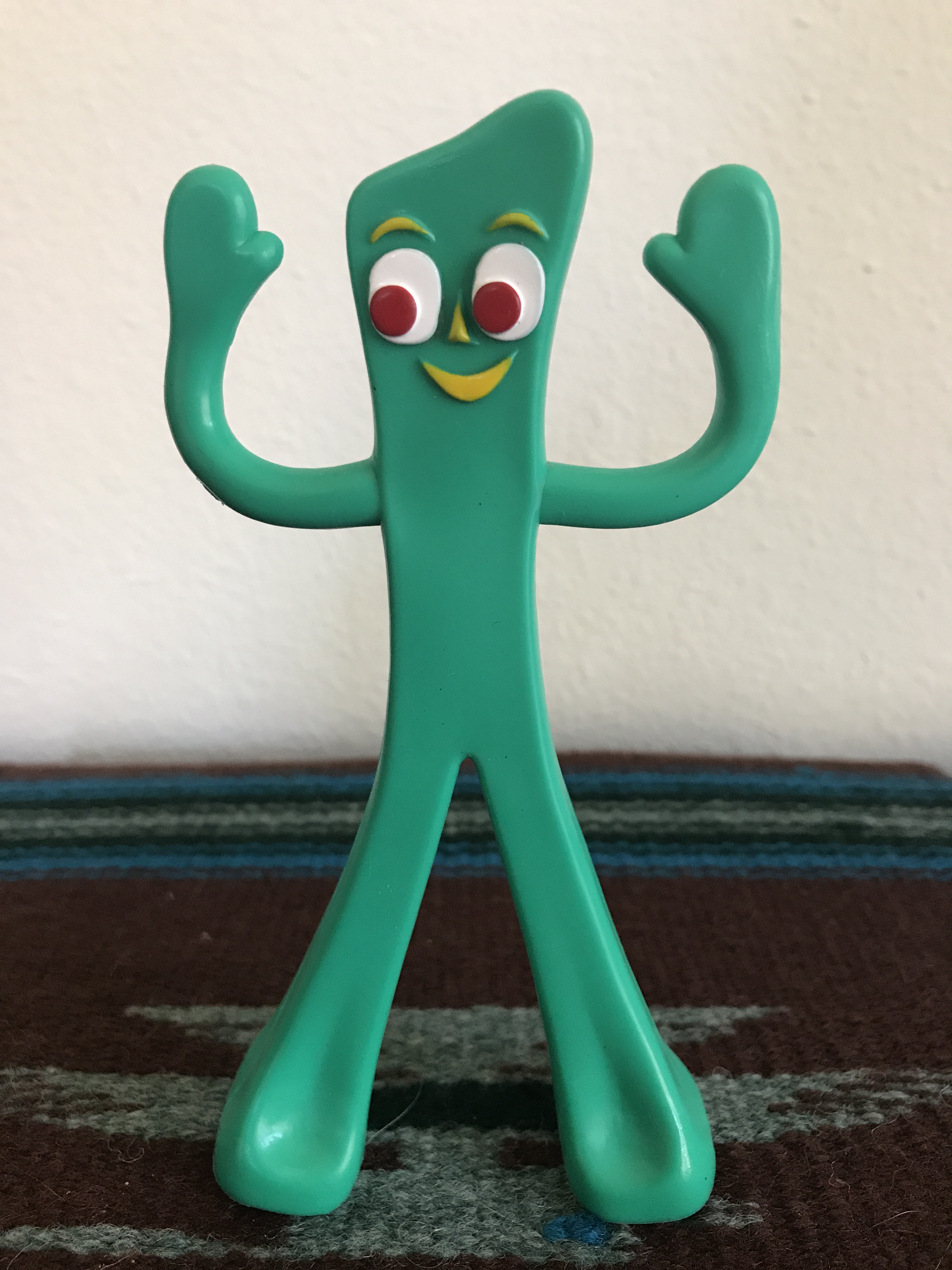
Five years ago this summer, I wrote an article titled Mighty Gumby and the Importance of Flexible Strength where I reiterated some great advice I received in my Austin yoga class : “Flexibility needs to be supported by strength and stability”. 

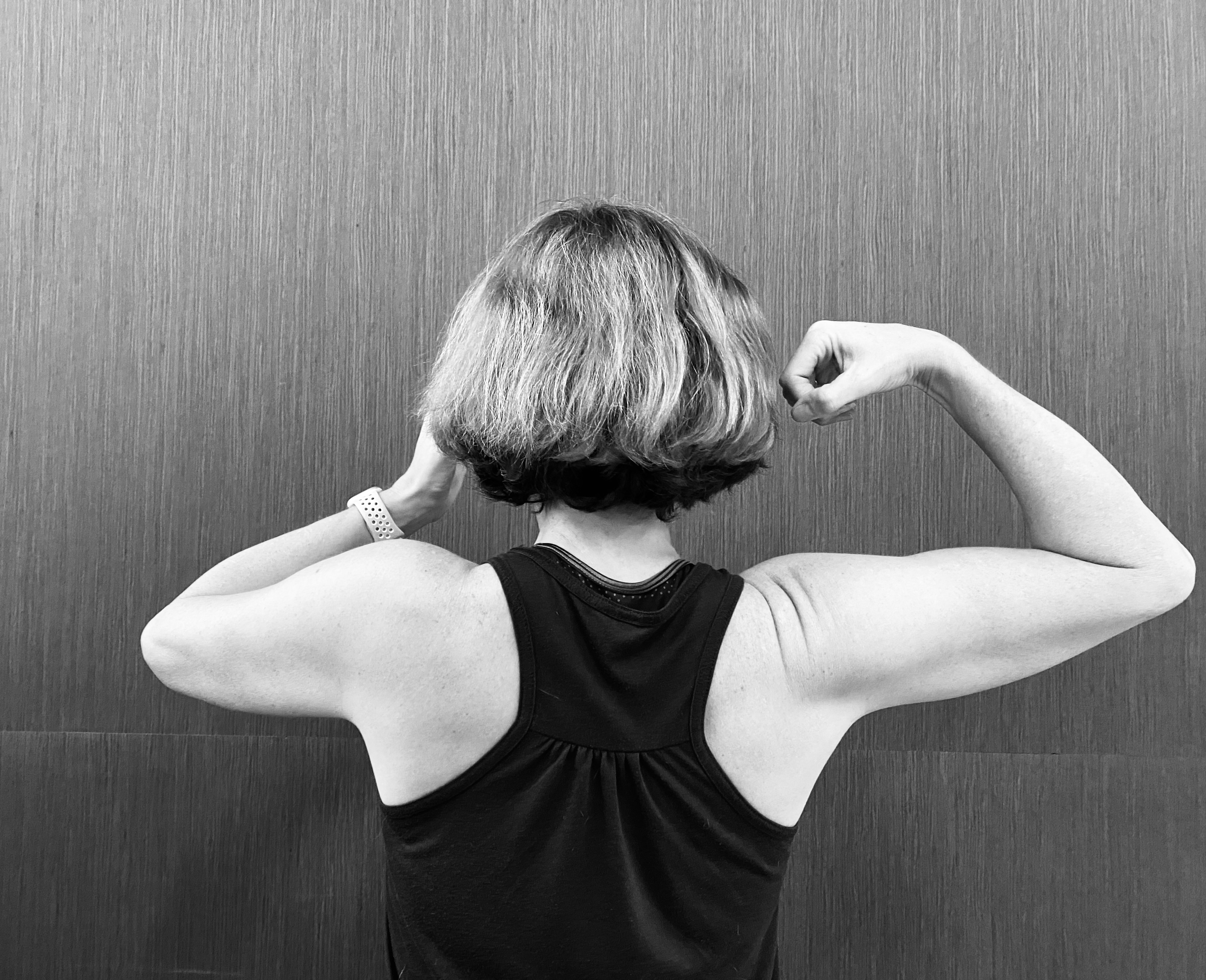
As I look back on the 2017 photo of my back, shoulder and arms, I can’t help but feel a bit sad and dejected at my current state in 2022.  At this point, I can barely raise my left arm to be parallel to the ground much less flex my bicep. 

Me in June 2022
Me in July 2017

My friend and Yoga Therapist, Nancy Martch recently asked me,  “What is your arm injury telling you?”.  In my mind I rephrased the question to – What have I learned from this painful and physically limiting condition?

Here are my thoughts about recovering from an illness or injury:

  1. Be patient with your body.
  2. Slow down and appreciate the small, micro-improvements you see or feel.
  3. Be flexible and adaptable with what you can and cannot do.
  4. Be accepting of the situation and have gratitude for the strong and healthy parts of your body.  (I have new respect and appreciation for my legs and back).
  5. Do not compare the injured area or side of your body to its healthy counterpart (in my case my left arm to my right arm). 
  6. Do not compare yourself to anyone else.
  7. Let go of any expectations.
  8. Continually observe, analysis, research and explore new possibilities for healing and recovery.
  9. Listen closely to your body for it will tell you what it needs.
  10. Be kind to yourself.

These past six months have been a humbling experience for me as I come to accept that my recovery could take over a year.  I am doing all that I can to keep moving and positively support my body’s immune system.  The systems, habits and actions I employ include:

  • Yoga therapy
  • Physical therapy and weight lifting
  • Swimming
  • Massage
  • Anti-Inflammatory diet

A slow healing process is never easy but I’m optimistic that I will be able to lift my left over my head some day.  I have put the Mighty Gumby back on my desk so I can be reminded of the importance of flexibility and a positive attitude.

Here’s to Letting Go and healing my frozen shoulder!